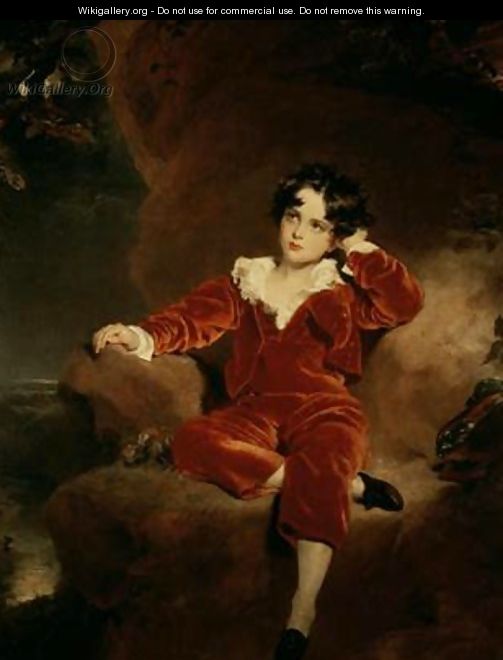
Thomas Lawrence (1769-1830), Elizabeth Farren
Metropolitan Museum of Art, New York
Thomas Lawrence: Regency Power and Brilliance
National Portrait Gallery, London
until 23rd January 2011
Thomas Lawrence was the greatest British portrait painter of his generation and one of the most celebrated artists in Europe in the early decades of the nineteenth century. This exhibition, the first in the UK for over thirty years, presents fifty-four works drawn from international public and private collections, some never before seen in public. A key figure in the history of British art,the exhibition provides a fresh understanding of Lawrence's career, exploring his astounding technical innovations, dazzling brushwork and bold use of colour through his greatest paintings and drawings. Stunning early works such as the beautiful full-length painting of actress Elizabeth Farren and the striking Arthur Atherley, are shown alongside majestic and powerful portraits of international statesmen, society figures, military leaders and royalty, created at the height of his fame, such as Pope Pius VII, Princess Sophia and the Earl of Aberdeen.
Lady Elizabeth Conyngham
Museu Calouste Gulbenkian, Lisbon
Thomas Lawrence took the London art world by storm at the Royal Academy exhibition of 1790. Although virtually unknown, this precocious 21-year-old artist dazzled audiences with his daring full-length portraits of Queen Charlotte and the actress, Elizabeth Farren. Their frankness, vivacity and delight in textures and detail departed from the overblown allegories of Grand Manner portraiture. The critics proclaimed Lawrence the rival and successor to Sir Joshua Reynolds, the founding President of the Academy.
Mary Hamilton
British Museum, London
Britain’s victory in the Napoleonic Wars in 1815 enabled Lawrence to achieve the greatest international reputation of any British artist. Commissioned by the Prince Regent, Lawrence travelled across Europe painting a series of monumental portraits of the sovereigns and military leaders who were allied in the defeat of Napoleon. These epoch capturing portraits, which hang together in the Waterloo Chamber at Windsor Castle, ensured Lawrence’s status and influence abroad.
Lady Selina Meade
Private collection
Knighted for his role as the prince’s artistic envoy, Lawrence began the series in London in 1814 and left for the Continent in 1818. In Vienna, he painted Charles, Archduke of Austria, enjoyed the glittering social life of the aristocracy and undertook private commissions such as Selina Meade. Just as he was preparing to return, the prince ordered him to paint the Pope. Lawrence’s year in Rome was the apex of his artistic aspirations and his portrait of Pius VII was the crowning glory of his artistic mission.
Pope Pius VII
Royal Collection, Windsor
In the 1820s Lawrence achieved a growing reputation in France. He stayed in Paris in 1825 and exhibited works such as the famous Charles William Lambton at the Paris Salon. He earned the respect of none other than Delacroix, who, according to Richard Holmes in his essay on Lawrence, said that the artist knew how to paint women's eyes; he also was praised by Baudelaire, who set him at odds with the neo-classical school of Ingres and David.
Master Charles William Lambton
Private collection
Margaret, Countess of Blessington
Wallace Collection, London
Paolo Veronese (1528-1588), Adoration of the Shepherds
Basilica dei SS Giovanni e Paolo, Venice
Praeter rerum seriem Beyond the order of things
parit deum hominem the virgin mother gives birth
virgo mater. to the man who is God.
Nec vir tangit virginem Neither has man touched the virgin
nec prolis originem nor is the father responsible
novit pater for the origin of the child.
Virtus sancti spiritus The power of the Holy Spirit
opus illud cœlitus has carried out
operatur. this heavenly work.
Initus et exitus The beginning and the end
partus tui penitus of your pregnancy
quis scrutatur? - who can begin to fathom it?
Dei providentia God's providence
quæ disponit omnia which disposes everything
tam suave so sweetly
tua puerperia elevates your childbirth
transfer in mysteria. to a mystery.
Mater ave. Our Mother hail!
Josquin Desprez (c.1450-1521), Praeter rerum seriem performed in the church of Santa Maria Maggiore in Rome by The Gabrieli Consort conducted by Paul McCreesh (from the DVD Christmas in Rome):
"Beyond the order of things" begins the text of a thirteenth-century Sequence about the mystery of the Incarnation; richly deep in the sonic depths begins Josquin Desprez's setting of the same text, Praeter rerum seriem. First printed in 1519, but probably composed earlier, this six-voiced Christmas motet presents an extremely tight series of imitative motifs around the central chant melody; the chant itself passes back and forth between Superius and Tenor voices in often near-canonic relationship. For much of the motet, Josquin counterpoises textural groups: the three lowest voices heard at the opening are placed in an antiphonal relationship with the upper three voices (when the melody is in the Superius), and both are juxtaposed with the full six-voiced sonority. Though all the voices are in fact freely composed, pairs throughout imitate one another so intimately that an illusion of canon obtains.
Following the common form of the late mediaeval Sequence, successive strophes of text, in pairs, take the same melody. Josquin's setting observes this underlying structure, but also imposes its own trajectory. The first two strophes comprise the first part of the motet, with the cantus firmus of the second strophe (from nec vir tangit) at double the speed, a vestige of the traditions of Isorhythm. Over the course of the second part of the motet, the rhythmic pace accelerates (to duple time, and then to a fast triple time symbolically referencing the Trinity), and the textural boundaries between voices blur themselves. Just before the final strophe of text, at the phrase omnia tam suave, hemiola syncopations blunt the edge of the jaunty triple-time, and the entire piece seems to revert to its opening sense of awe for the prayerful close.
(from All Music Guide)
Vittore Carpaccio (1465-1526), The Lion of St Mark
Palazzo Ducale, Venice
No place in Venice can boast such a marvelous heritage as the Doge’s Palace, the political heart of the Venetian Republic for centuries. A masterpiece of Gothic and Renaissance architecture, it was built on the foundations of fortified buildings dating back to the origins of the city (V-VI century AD). The present area of San Marco was actually chosen as one of the three main strategic points of the Byzantine empire. It underwent many transformations in the course of the centuries and performed at least four fundamental functions: it was the seat of the Venetian government, the Palace of Justice, the Doge’s Residence and the Prison. Thus it was a centralised political and administrative complex intended to be not simply a functional building but also and especially the expression of the richness and supremacy of the city.
The Doge's Palace: official video by Venice Civic Museums (apologies for the wholly inappropriate music):
The first part of the Palace to be completed in its present form was the south wing, which faces the Lagoon. This wing, initially separate from the other two buildings, was conceived in the 1340s. On the first floor it contains one enormous room, one of the largest ever built in Europe: the Great Council Hall. With its impressive size (the room is 53m long, 25m wide and 14m high) the Great Council Hall is probably one of best examples of the engineering skills of the Venetians.
The Great Council was the main city assembly and was composed of all Venetian noblemen from 25 years upwards, so its membership could be up to two thousand! During these meetings the patrician class proposed and discussed new laws and appointed the members of all the other offices of State. The present decoration of the Great Council Hall is an astonishing collection of paintings which celebrate the greatness of Venetian history, the virtues of its government and its divine protection. Among the many Veroneses, Bassanos and Tintorettos, one is struck by what is possibly one of the largest oil paintings on canvas ever realised: the Paradise by Jacopo and Domenico Tintoretto. In the centre at the top can be seen Christ crowning the Virgin, while more than 500 angels, saints, evangelists, prophets and common people are present all around for the occasion. The picture is full of Tintoretto’s distinctive mystical light.
Jacopo Tintoretto and Workshop, Paradise Palazzo Ducale, Venice
The second part of the Doge’s Palace to be built, almost a century after the first, is the wing facing the Piazzetta, opposite the Biblioteca Marciana. Erected as a Palace of Justice under Doge Francesco Foscari, it is not always opened to the public. Although it was constructed in the first half of the XV century, in order to guarantee uniformity it was built in the Gothic style. Its façade, like the one overlooking the lagoon, is decorated with multi-coloured-brick lozenges in the upper part and with loggias down below. The wonderful Gothic loggias are decorated in an elegant quatrefoil pattern. The Paper Doorway, between the Palace of Justice and the Basilica, was one of the two main entrances of the building. A masterpiece by Bartolomeo Bon, it is embellished with several statues: note the one of Doge Francesco Foscari kneeling before the Lion of St Mark. This is a copy dating from the XIX century, since the original sculptures were destroyed at the end of the XVIII century, when the city was invaded by Napoleon.
Last but not least, the Renaissance wing houses the Doge’s Apartments and some important political rooms. As regards the former, one should bear in mind that the Doge’s Palace was not a monarchical residence, but rather a civic structure intended for the government of the city. The Doge, from at least the year 1000, had no great power and was obliged to live in the same building as the government.
Paolo Veronese (1528-1588), The Rape of Europa Palazzo Ducale, Venice
The Doge, once elected (remember Venice was a Republic), had to move to these apartments with the rest of his family and had to remain there until he died. With the unique role of representing the State, the Doge had practically no private life. The rooms of his apartments, some in Baroque style and others in Rococo, are a magnificent testament of the richness of the Republic. On the third floor, visitors can admire some of the halls where the Collegio, the Senate and the Council of Ten met. None of the paintings here has a merely decorative function, each single element was conceived as part of an intricate political allegory aiming at the glorification of the city. The ceiling of the Room of the Collegio, for instance, is a priceless work by Paolo Veronese describing the features of the good government of Venice.
In the Renaissance wing the two ceremonial staircases cannot be missed. The first one is the so called Giants’ Stairway in the courtyard, at the top of which two enormous statues stand for the security of the Palace: Mars and Neptune, wonderful works by Jacopo Sansovino. These two symbols stand for the Stato da Terra and Stato da Mar, the power that Venice had on land and on sea. The second staircase has a spectacular gilded, stuccoed and frescoed vault and was therefore named the Golden Staircase. Here also one finds a large number of allegories and symbols praising the richness, the magnificence and the uniqueness of Venice.
At the end of the tour, visitors pass across the famous Bridge of Sighs and into the New Prisons. The old prisons, called the Leads, which are still visible in the Doge’s Palace, were hellish, and the insufferable conditions led to the death of many prisoners. This is why in the 1580s new prisons were opened, in another building adjacent to the Doge’s Palace but seperated from it by a canal. Very modern at that time, the New Prisons still conserve some original carvings and graffiti left by the prisoners.
In conclusion the Doge’s Palace, not by chance the most visited museum in the city, is probably one of the most representative monuments in Venice. Full of charm, it contains not only great masterpieces but also evidence of the greatness of Venetian history.
Web Gallery of Art: Veronese paintings in the Doge's Palace
Doge's Palace: 15 high quality fullscreen interactive panoramas (marvellous! highly recommended!)
'I shall not die, but live, and declare the works of the Lord' - (from Psalm 118) - note left by Giacomo Casanova for his captors on his escape from the Leads.
Johann Sebastian Bach (1685 - 1750) Christen, ätzet diesen tag BWV 63, in rehearsal
Arthaus DVD Release date: June 2002
Running time: 101'
Ann Monoyios, soprano
Sara Mingardo, alto
Rufus Müller, tenor
Stephan Loges, bass
Monteverdi Choir English Baroque Soloists
conducted by John Eliot Gardiner
Amazon.co.uk review:
The In Rehearsal series continues to offer fascinating insights into the technique of conducting with this film about John Eliot Gardiner rehearsing Bach's Cantata Christen, ätzet diesen Tag BWV63. The venue is EMI's Abbey Road Studios, so there are the obligatory hackneyed shots of that zebra crossing at the beginning, but there's nothing else hackneyed about the rest of this engrossing film. The devil is in the detail: what Gardiner says about Bach and period performance (enlightening though it is) is less interesting than the way he says it. After one rousing chorus, for example, he leaves everyone breathless in silence while he digs some dirt from his fingernails before giving them a cool "Well done". A mild contretemps with the first trumpet leads to an interview in which the brass player nervously and darkly hints at even greater conflict under the surface of the rehearsal. It's remarkable to hear the sublime music-making that results despite, or perhaps because of, the tension: Gardiner continually urges the musicians to swing the beat and feel the pulse as if it were a dance, and they do.